Sunday, March 05, 2017
Our DNA Matching Pashtuns of Afghanistan and Pakistan
 |
| Pashtun People |
Our Goldfoot line's Y haplogroup DNA testing was labeled as Q-L245 when we started.
Is Q-L245 found in modern Arab populations? Yes
Is Q-L245 found in modern Anatolian populatons? Yes
Is Q-L245 found in modern Iran and Iraq? Yes
Is Q-L245 found from the modern locations of the Ancient city of Ur down to the tip of Saudi Arabia and Oman? Yes
Does that cover the places where ancient Israel, Judah, and Sumaria were? Yes.
There you are. I figure we were in Ur, now a part of Iraq, where Abraham was found to be in the Bible. We were with him in his journeys, maybe married into the family or as a servant, for Abraham, I expect, would have been a J1, of the Cohen gene, for Moses is a direct descendant of his as well. We wound up in Egypt with the rest, and were taken by the Assyrians in 721 BCE eastward again, where Abraham originally came from. Those of the northern tribes taken by Assyrians were called the Ten Lost Tribes of Israel. My family became one of the Ashkenazi Jews that went to Germany instead.
Questions were answered by Rebekah Canada, leader of our group on FTDNA.
My brother's Y haplogroup titles have been updated through various stages of higher testing:
1. Q1b1a
2. Q-(M 242)
3. Q-(M 378)
4. Q-L245
5.Q-Y2200
***6. QBZ67
I have found that at the level of testing of 12 alleles of Q, my brother matches:
1. someone from Republic of Dagistan, Kaitak
2. someone from Republic of Dagistan, Avar
3. someone from Turkey
4. someone with an Arabic name
5. someone from Baghdad
And now, it has been found that many Pashtuns from Afghanistan and Pakistan share Q-M242.
"Paragroup Q-M242 (xMEH2, xM378) (of Haplogroup Q-M242 (Y-DNA)) was found at 16.3% in Pashtuns. Haplogroup Q-M242 is also found at a frequency of 18% in Pashtuns in the Afghan capital of Kabul.
"Kabul is the capital of Afghanistan as well as its largest city, located in the eastern section of the country. According to a 2015 estimate, the population of the city was around 3,678,033 which includes all the major ethnic groups. Wikipedia. So our matches are 18% of the people of Kabul, the Pashtuns.
"Over the past decade, Kabul has become one of the world’s fastest-growing cities. The toppling of the Taliban in 2001 and the hope of increased security and economic possibilities enticed many Afghans to move here: people displaced by fighting in the countryside, refugees returning from Pakistan and Iran, and hordes of labourers simply looking for a better life."
"The Pashtuns (ethnic Afghans) make up the largest ethnic group in Afghanistan, comprising between 42% and 60% of the country's population. Their main territory, sometimes called Pashtunistan,[by whom?] is between the Hindu Kush mountains in Afghanistan and the Indus River in neighboring Pakistan, where they are the second largest ethnic group. After the rise of the Hotaki dynasty in 1709 and the Durrani Empire in 1747, Pashtuns expanded by forming communities north of the Hindu Kush and elsewhere in Afghanistan.
The term "Afghan" is synonymous with the ethnonym "Pashtun" and has been mentioned as early as the 3rd century, referring to the tribes inhabiting the lands south of the Hindu Kush around the Sulaiman Mountains."
Pashtuns make up an estimated 27.7 million (15%) of Pakistan's total population. The largest urban population of Pashtuns is interestingly found in the southern coastal city of Karachi with a fluctuating population estimated up to 7 million. This is then followed by Peshawar, Quetta, Rawalpindi, Islamabad, and Lahore in descending order

One characteristic my father had was a cleft in his chin. I just saw that this morning on a Middle Easterner. Another thing is that my brother, myself and my 1st cousin Goldfoot are all left-handed. I wonder what the % of our matches of Q also have this left-handedness. It sure makes writing Hebrew from right to left easier! Are there any other lefties in our family? Maybe it's from our grandmother's Jermulowske side.
Resource: http://jewishbubba.blogspot.com/2017/03/pashtos-of-afghanistan-and-pakistan-and.html
https://www.theguardian.com/cities/2014/dec/11/kabul-afghanistan-fifth-fastest-growing-city-world-rapid-urbanisation
https://en.wikipedia.org/wiki/Ethnic_groups_in_Afghanistan
also, from 2010, http://goldfoot_genealogy.blogspot.com/2010/11/few-hazara-and-sindhi-people-with-our.html
https://www.familytreedna.com/public/dna_afghan_pak?iframe=ycolorized (results of DNA test on Pashtuns-excellent) (Report from FTDNA on Pashtun DNA-Qs. Excellenst
Labels: Afghanistan, Ashkenazis, dna, Goldfoot, matches, middle east, Pakistan, Pashtuns, Q-L245, Q-M242, Y haplogroup Q


Friday, April 29, 2016
GOLDFOOT DNA Report from Rebekah Canada
 |
| Nadene and David Goldfoot, siblings, 2011 children of Maurice and Mildred Goldfoot nee Robinson son of Nathan Abraham Goldfoot Telsiai, Kaunas, Lithuania and Zlata Jerumulowske-Lazdijai, Lithuania/Poland |
From Rebekah Canada
on our Q1b1a (Q-L245) haplogroup, now updated to QBZ67 by taking the Big Y Test.
shortened by Nadene Goldfoot:
It was Q3a1 of Ashkenazi Jews way bakin in the 1st millennium CE that reads up to 5% of this population are in the present day Ashkenazim. (from Rebecca Canada's new report.

ticists and geneticgenealogists. This positive experience of collaboration between academic and citizen science provides a model for further joint projects. Merging data and skills of academic and citizen science promises to combine, respectively, quality andquantity, generalization and specialization, and achieve a well-balanced and careful interpretation of the paternal-sidehistory of human populations.
Keywords:
Y-chromosome, Haplogroup Q, Population genetics, Genetic genealogy, Ashkenazi, Phylogeography,Gene geography
* Correspondence: balanovsky@inbox.ru
1
Vavilov Institute of General Genetics, Moscow, Russia
2
Research Centre for Medical Genetics, Moscow, RussiaFull list of author information is available at the end of the article
What
this tells us is that Q-Y2200 has been in the Jewish population for a long time.
However, like some papers have suggested, the Ashkenazi Jewish population went
through a severe reduction when it was founded. It also suffered through
persecution many dramatic population reductions since.
Types of Tests
Two
types of test went into the tree. Both tests use Y-SNP markers
The
first is BIG Y. It is a NexGen sequencing test that provides results for over 10
million base pairs of the Y-chromosome. The result is long stretches of the
Y-chromosome where we know all of someone’s DNA values. This lets us find
previously unknown markers. This level of sequencing is also needed to date the
age of branches. It is the better test, but it is also the more expensive
test.
The
second type of test is a Y-SNP Pack panel. This provides results for specific
known Y-SNPs. Because it is more affordable, it is possible to test many more
people with it. This helps us fill in geographic and family history information
on branches.
I just ordered it now ---4/29/16 at 8:42am. Hope to find out more about our line with it. It is taking from 8 to 10 weeks for the results to come in, which brings us to June 29th to July 15th for answers. This type of test on SNPs takes the longest procedures for Lab work. David had 2 SNPs tested in 2011; the L245 and another. He was positive for L245.
Between
the two types of tests, the project now has almost 100 Q-L245 men tested for the
new tree branches.
What have we learned?
First, we know that Q-L245 is much older than simple Y-STR marker
analysis suggests. It is also much more diverse. We have found, with many
thanks to Vladimir, that academic samples from the Avar, Hazara, and Azeri
separated from other branches long ago. This means they are not the source
populations from the more populous European and Middle Eastern branches.
Indeed, the European branches with a few exceptions are only distantly
connected. We have disproved the hypothesis that the two Mennonite lineages are
the result of a recent Jewish convert in the past 500 years.
Q-Y2200 Goldfoot haplogroup belongs to this.
We have long known that Y-DNA Q is between 4% and 5% of the modern
Ashkenazi Jewish population. All of you with known Y-DNA Q Ashkenazic lines (an
oral tradition of being Ashkenazi Jews and part of haplogroup Q) tested so far
belong to the Q-Y2200 branch of Q. From there, you come from two distantly
related men who lived around 450 AD. The different branches split the group into
many branches that end in late medieval times. These dates and that the first
Q-Y2200 male lived around 2600 years ago disproves the hypothesis that Q-Y2200
was introduced into the Ashkenazi population by the Khazar empire.
Is
Q-Y2200 Jewish? Well, by dates I think yes. However, we have a few of people who
did not know that they might be Jewish before testing. We also have the Q-BZ72
branch that is restricted to a Portuguese and an Italian.
Q-YP1236
Another major finding is that the various Mizrahi (Iraqi, Moroccan, and
South African) Jewish men are from a different branch of Q-L245. We need to do
additional testing to discover if Iranian (Persian) and Sephardi Jewish Q-L245
men are Q-Y2200 or Q-YP1236.
Q-L619.2 & Q-FGC2020
The
Armenian population is home to many Q lineages. Two of these are Q-L245
lineages. They are distinct from each other. They are not close enough to either
of the Jewish lineages to imply recent shared ancestry.
What next?
I
hope to see many more in the project who are known or predicted to be Q-L245
order the Q-L245 SNP Pack. I know that Vladimir is also working to test more
academic samples.
I
have two areas that I am going to focus on in 2016 for Q-L245. First, I plan to
test those who are likely to be Q-Y2200 but do not have an oral tradition of
being Ashkenazic Jewish. This includes known and suspected Crypto-Jews.
Regards,
Rebekah A. Canada
Volunteer Administrator, Family Tree
DNA (Continued below)
According to Rebekah's results, the first Q-Y2200 originated or was traced to 2600 years ago which takes us to 584 BCE. This coincides with the Babylonians' attack on Israel in the two years of 597 BCE and again in 586 BCE when they took away Jewish people to Babylon and other parts wherever they sell slaves.
Our direct line of Q1b1a or Q-L245 came along in the year 450 CE.
For this, I will check my timeline. http://israel-nadene.blogspot.com/2014/08/jews-living-in-judea-samaria-and-other.html
A decree of the emperors Theodosius II and Valentinian III, addressed to Amatius, prefect of Gaul (Gaul (Latin: Gallia) was a region of Western Europe during the Iron Age and Roman era, encompassing present day France,Luxembourg, Belgium, most of Switzerland, parts of Northern Italy, as well as the parts of the Netherlands and Germany on the west bank of the Rhine)
(9 July 425), prohibited Jews and pagans from practicing law and from holding public offices ("militandi"), in order that Christians should not be in subjection to them, and thus be incited to change their faith.
From the year 465 the Church took official cognizance of the Jews. Jews were found in Marseille in the sixth century
300 3 million Jews in world
335-427 Ashi, editor of the Babylonian Talmud, headed the academy of Sura which he re-established at Mata Mehasya. which is in "Sasanian Babylonia." The Babylonian Talmud has turned out to be the most widely used, the most popular of the 2 Talmuds.
300 3 million Jews in world
335-427 Ashi, editor of the Babylonian Talmud, headed the academy of Sura which he re-established at Mata Mehasya. which is in "Sasanian Babylonia." The Babylonian Talmud has turned out to be the most widely used, the most popular of the 2 Talmuds.
Our Goldfus-Goldfoots could not have been in Lithuania until about 700 CE.
700 Jews were living in Lithuania. "Lithuanian Jews or Litvaks are Jews with roots in the Grand Duchy of Lithuania: (present-day Lithuania, Belarus,Ukraine, Latvia and the northeastern Suwałki region of Poland).
FTDNA reports that" our Y haplogroups are traced back originating in Africa 115,000 years ago. From there, we have branched out" Abraham lived in the 2nd millennium BCE or was born c1948 BCE. Imagine how much further back man goes!
FTDNA reports that" our Y haplogroups are traced back originating in Africa 115,000 years ago. From there, we have branched out" Abraham lived in the 2nd millennium BCE or was born c1948 BCE. Imagine how much further back man goes!
Labels: dna, Goldfoot, haplogroup, Q-L245, Q1b1a, report
Monday, July 14, 2014
Q-L245, Now QBZ67 Haplogroup of Goldfoot
Nadene Goldfoot

Grandfather Nathan Abraham Goldfoot was born in Telsiai, Lithuania in 1870. He traveled to England, then Ireland and finally got to Council, Idaho where he married our grandmother, Hattie Jermulowske of Lazdijai, Suwalki, Poland/Lithuania, depending on the year.
His grandson has had his DNA tested and we find we are Q-L245 through Family Tree DNA in Houston, Texas. Also matching us at the 12 allele level though they took the 67 allele test, are:
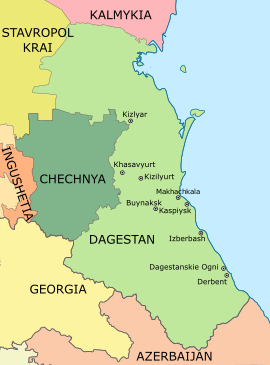
1. 2 people from Dagestan who also are Q-L245. At 24 generations we have a 91.41% chance of sharing a common ancestor. That would take us back 600 years to 1414.
Dagestan is located in North Caucasus, Russia with a population of 2,910,249, Dagestan is ethnically very diverse (it is Russia's most heterogeneous republic, where no ethnic group forms a majority) with several dozen ethnic groups and subgroups inhabiting the republic, most of which speak Caucasian and Turkic languages. Largest among these ethnic groups are the Avar, Dargin,Kumyk, Lezgian, Laks, Azerbaijani, Tabasaran and Chechen.Ethnic Russians comprise about 3.6% of Dagestan's total population. Russian is the primary official language and the lingua franca among the ethnic groups.]
2. A few others matching at this same level are listed as Jaisy, Iraqi Arabs, from Baghdad. We have a 69.03% of sharing a common ancestor at 24 generations back.
Being we are Jews and they are not makes it interesting. In 2011 Rebekah Canada let me know that our Y haplogroup was from parts of Turkey, Iran, Iraq and possibly southern Saudi Arabia.
On the Karaite testing and finding Q1b1a or Q-L245, The presence of the Y-DNA haplogroup Q1b1a (Q-L245) in Ashkenazi and Karaite samples is not indicative of Khazar ancestry but rather of Southwest Asian ancestry. from http://forums.familytreedna.com/showthread.php?t=35397, The Genetics of Crimean Karaites

Grandfather Nathan Abraham Goldfoot was born in Telsiai, Lithuania in 1870. He traveled to England, then Ireland and finally got to Council, Idaho where he married our grandmother, Hattie Jermulowske of Lazdijai, Suwalki, Poland/Lithuania, depending on the year.
His grandson has had his DNA tested and we find we are Q-L245 through Family Tree DNA in Houston, Texas. Also matching us at the 12 allele level though they took the 67 allele test, are:
1. 2 people from Dagestan who also are Q-L245. At 24 generations we have a 91.41% chance of sharing a common ancestor. That would take us back 600 years to 1414.
Dagestan is located in North Caucasus, Russia with a population of 2,910,249, Dagestan is ethnically very diverse (it is Russia's most heterogeneous republic, where no ethnic group forms a majority) with several dozen ethnic groups and subgroups inhabiting the republic, most of which speak Caucasian and Turkic languages. Largest among these ethnic groups are the Avar, Dargin,Kumyk, Lezgian, Laks, Azerbaijani, Tabasaran and Chechen.Ethnic Russians comprise about 3.6% of Dagestan's total population. Russian is the primary official language and the lingua franca among the ethnic groups.]
2. A few others matching at this same level are listed as Jaisy, Iraqi Arabs, from Baghdad. We have a 69.03% of sharing a common ancestor at 24 generations back.
Being we are Jews and they are not makes it interesting. In 2011 Rebekah Canada let me know that our Y haplogroup was from parts of Turkey, Iran, Iraq and possibly southern Saudi Arabia.
On the Karaite testing and finding Q1b1a or Q-L245, The presence of the Y-DNA haplogroup Q1b1a (Q-L245) in Ashkenazi and Karaite samples is not indicative of Khazar ancestry but rather of Southwest Asian ancestry. from http://forums.familytreedna.com/showthread.php?t=35397, The Genetics of Crimean Karaites
Labels: Baghdad, Dagestan, dna, Lithuania, Origins, Q-L245
Monday, May 28, 2012
The Latest on our DNA Line of Q1b1a or Q-L245
As for our Q1b1a haplogroup origins, familytreedna leader just stated, "I think in the next two years we will completely break up the Jewish Y-DNA
branches into lines that are no more than 3,000 years old. Then we will really
start to figure out when they became Middle Eastern or Jewish."
Right now the Q lines lead us into the Middle East of Pakistan and India, which is a surprise, though this is back more than 5,000 years. " Our labeling is M378. and in getting more specific, we are Q-L245. We go back 5,000 years for Q-M378 which includes Q-L245. There are some Q-M378 in the Middle East who are not Q-L245, however. This is why our leaders think that Q-L245 was born in the Middle East now. The age of Q-L245 needs work. Right now, they know that there are at least two branches."
Right now the Q lines lead us into the Middle East of Pakistan and India, which is a surprise, though this is back more than 5,000 years. " Our labeling is M378. and in getting more specific, we are Q-L245. We go back 5,000 years for Q-M378 which includes Q-L245. There are some Q-M378 in the Middle East who are not Q-L245, however. This is why our leaders think that Q-L245 was born in the Middle East now. The age of Q-L245 needs work. Right now, they know that there are at least two branches."
| Reference:Rebekah | Canada |
Also, we have a few matches from the Assyrian Project. Here's a great map of Assyria in Middle East http://www.keyway.ca/htm2002/ancassy.htm It included Ur which is now in present day Iraq.
Labels: Assyrian Project, branches, India, middle east, Pakistan, Q-L245, Ur
